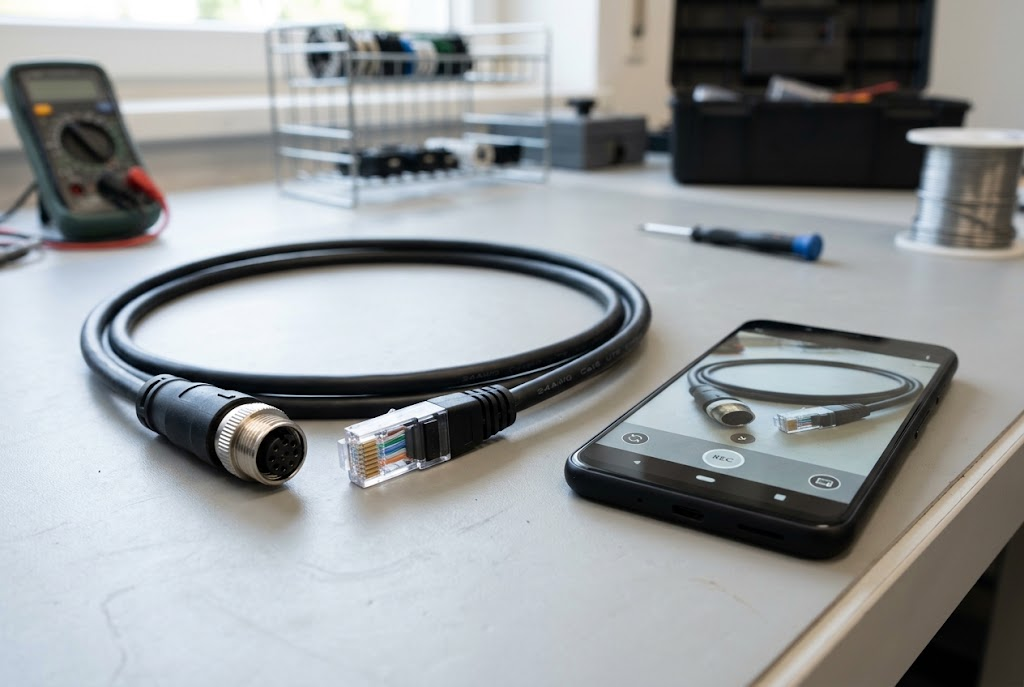
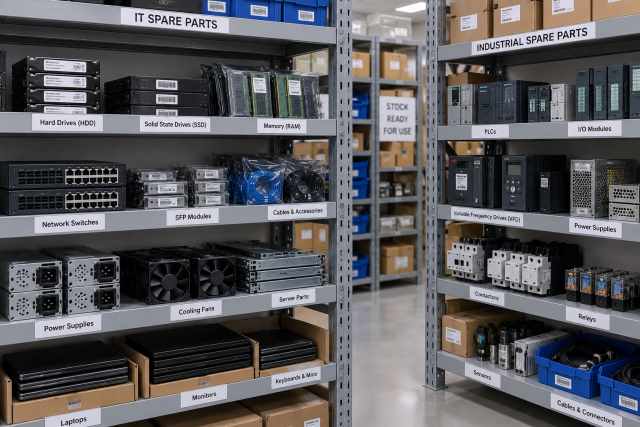
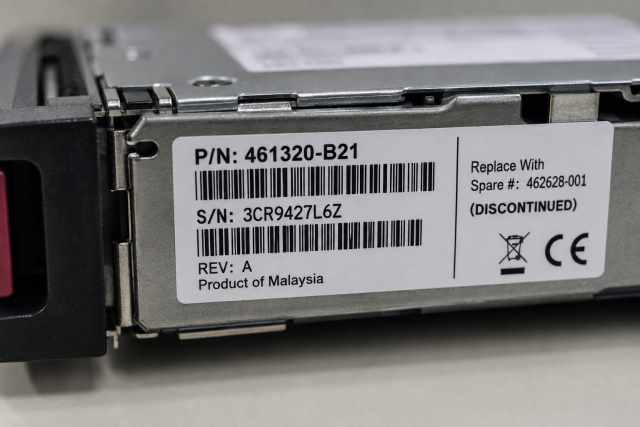
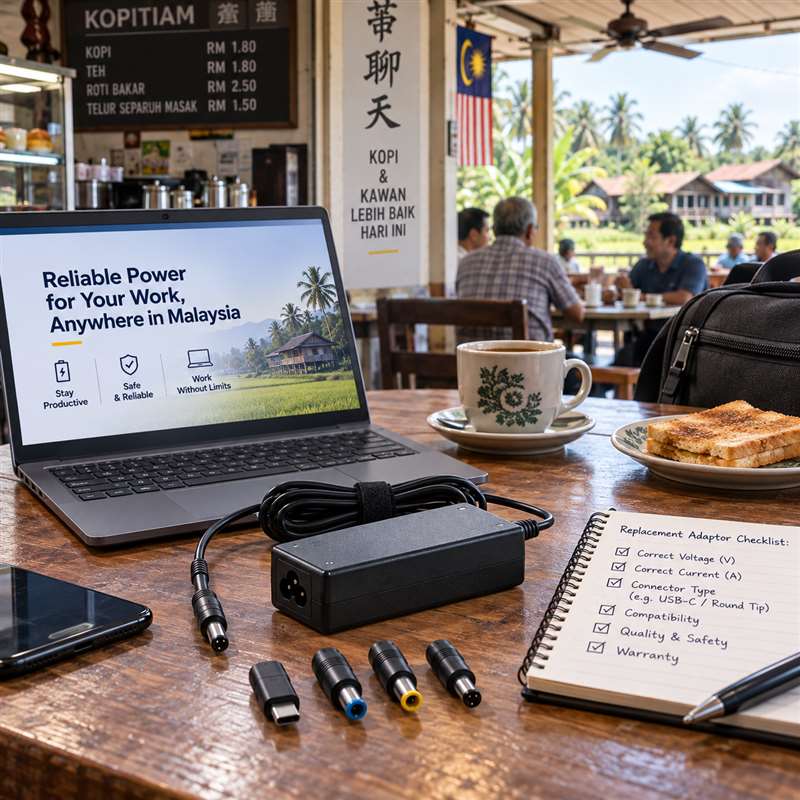
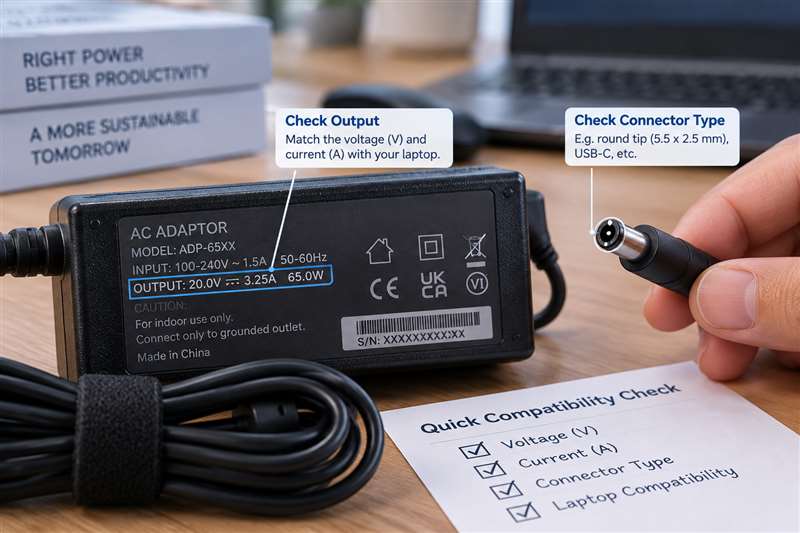
Kalau permintaan sebut harga cuma tulis “tolong quote laptop charger”, pembekal pasti perlu bertanya lagi. Laptop model apa? Connector jenis mana? Berapa watt? Berapa unit?
Permintaan yang baik tidak semestinya panjang. Yang penting, maklumat asas cukup untuk pembekal memahami barang dan keperluan syarikat anda.
1. Beritahu peralatan apa yang digunakan
Mulakan dengan jenama dan model penuh peralatan. Contohnya laptop, server, PLC, HMI, industrial computer atau mesin lain.
Kalau tidak pasti nombor mana ialah model, ambil gambar label peralatan yang jelas.
2. Catat nombor pada komponen lama
Salin part number penuh daripada komponen lama atau yang sudah rosak. Masukkan spare number, revision dan model code jika ada.
Jangan terus buang komponen lama. Ia mungkin menjadi rujukan paling berguna semasa mencari pengganti.
3. Sertakan gambar yang jelas
Ambil gambar penuh barang, semua label dan setiap connector. Untuk kabel, tunjukkan kedua-dua hujung. Untuk komponen dalaman, tunjukkan tempat ia dipasang jika boleh dilakukan dengan selamat.
Tutup serial number sulit, maklumat pelanggan dan asset tag dalaman jika tidak diperlukan.
4. Terangkan kegunaan barang
Pembekal mungkin perlu tahu sama ada kabel digunakan untuk programming, komunikasi biasa atau menyambungkan dua peralatan tertentu. Untuk adaptor, model laptop dan jenis charging connector diperlukan. Untuk server PSU, penggunaan redundancy mungkin perlu diketahui.
Ayat mudah sudah memadai. Contohnya: “Kabel ini digunakan untuk sambungkan laptop maintenance kepada PLC semasa programming.”
Illustrative image.
5. Nyatakan kuantiti
Beritahu sama ada anda perlukan satu unit, beberapa unit untuk cawangan atau unit tambahan sebagai spare. Jangan biarkan pembekal meneka.
6. Beritahu sama ada pilihan lain boleh dinilai
Ada syarikat yang mesti menggunakan part number yang sama. Ada juga yang membenarkan pasukan teknikal menilai pilihan serasi.
Nyatakan perkara ini dengan jelas. Pembekal tidak patut menganggap barang lain boleh diterima tanpa persetujuan.
7. Nyatakan keperluan condition
Jika polisi purchasing memerlukan barang baharu, original packaging atau condition tertentu, tuliskan dalam permintaan. Untuk peralatan lama atau discontinued, pilihan yang ada mungkin berbeza dan perlu disahkan sebelum membeli.
8. Masukkan lokasi penghantaran
Berikan bandar, negeri dan postcode di Malaysia. Alamat peribadi penuh biasanya belum diperlukan semasa pertanyaan awal.
9. Terangkan bila barang diperlukan
Beritahu tarikh diperlukan dan sama ada peralatan sudah tidak boleh digunakan. Ini membantu pembekal memahami tahap keperluan.
Tarikh yang diminta bukan jaminan stok atau penghantaran. Tunggu pengesahan bertulis daripada pembekal.
Illustrative image.
Template permintaan sebut harga
Nama syarikat:
Jenama dan model peralatan:
Barang diperlukan:
Part/spare/revision number:
Kuantiti:
Kegunaan atau masalah peralatan:
Mesti nombor sama, atau pilihan lain boleh dinilai:
Bandar dan negeri penghantaran:
Tarikh diperlukan:
Gambar dilampirkan:
Illustrative image.
Sebelum tekan butang hantar
Buka semula setiap gambar dan pastikan label boleh dibaca. Semak kuantiti dan lokasi penghantaran. Minta pengguna teknikal menyemak permintaan jika keserasian sangat penting.
Maklumat yang lengkap menjimatkan masa kedua-dua pihak dan memudahkan sebut harga dinilai.
Minta sebut harga alat ganti Hantar model peralatan, part number, gambar, kuantiti dan lokasi penghantaran di Malaysia supaya NJ Bravo boleh menilai pilihan sourcing yang ada.
A quotation request that says only “please quote laptop charger” will usually lead to more questions. Which laptop? What connector? What wattage? How many units?
A clear request does not need to be long. It simply needs enough information for the supplier to understand the part and the business requirement.
Illustrative image.
1. Name the equipment
Start with the manufacturer and full model of the equipment that uses the part. This may be a laptop, server, PLC, HMI, industrial computer or another machine.
If you are unsure which number is the model, send a clear photo of the equipment label.
2. Record the old part number
Copy the complete part number from the failed or existing component. Include spare numbers, revision numbers and model codes when shown.
Keep the old part until identification is complete. It is often the best reference available.
3. Add clear photographs
Send a photo of the whole part, every label and all connectors. For a cable, show both ends. For an internal component, show where it is installed when this can be done safely.
Cover confidential serial numbers, customer information and internal asset tags when they are not required.
4. Explain what the part is used for
A supplier may need to know whether a cable is for programming, normal communication or connecting two specific devices. An adaptor request may require the laptop model and charging connector. A server PSU request may require information about redundant power.
One or two plain sentences are enough. For example: “This cable connects our maintenance laptop to a PLC for programming.”
Illustrative image.
5. State the quantity
Say whether you need one replacement, several units for different branches or extra units to keep as spares. Do not leave the supplier to guess.
6. Say whether alternatives can be considered
Some companies require the exact original part number. Others may allow their technical team to review a compatible alternative.
Make this clear in the request. A supplier should not assume that a different part is acceptable.
7. Include condition requirements
If your purchasing policy requires new, original packaging or another defined condition, state it. For discontinued equipment, available sourcing options may vary, so condition must be confirmed before purchase.
8. Give the delivery location
Include the town, state and postcode in Malaysia. The full personal address is normally unnecessary at the first enquiry stage.
9. Explain the required date honestly
Say when the part is needed and whether the equipment is already down. This helps the supplier understand the urgency.
A required date is a buyer’s requirement, not confirmation that stock or delivery is available. Wait for the supplier’s written response.
Illustrative image.
A short quotation template
Company:
Equipment manufacturer and model:
Required part:
Part/spare/revision number:
Quantity:
Purpose or equipment fault:
Exact replacement required, or alternative may be reviewed:
Delivery town and state:
Required date:
Photos attached:
Illustrative image.
Before pressing send
Open every photograph and check that the labels are readable. Confirm the quantity and delivery location. Ask the technical user to review the request when compatibility is important.
A complete request saves time for both sides and makes the quotation easier to assess.
Request a replacement-part quotation Send the equipment model, part number, photographs, quantity and Malaysian delivery location so NJ Bravo can assess available sourcing options.
Power supply server rosak, tetapi rekod pembelian cuma tulis “server PSU”. Maklumat itu biasanya belum cukup untuk mencari unit pengganti yang betul.
Nombor yang paling berguna selalunya ada pada label power supply lama. Sebelum minta sebut harga, kenal pasti model server dan catat semua nombor pada unit tersebut.
Mulakan dengan model penuh server
Catat jenama dan model penuh server. Masukkan juga generation atau machine type jika ada.
Ayat seperti “Dell server” atau “HP power supply” terlalu umum. Satu jenama mempunyai banyak model dan reka bentuk PSU yang berbeza.
Di mana label PSU berada?
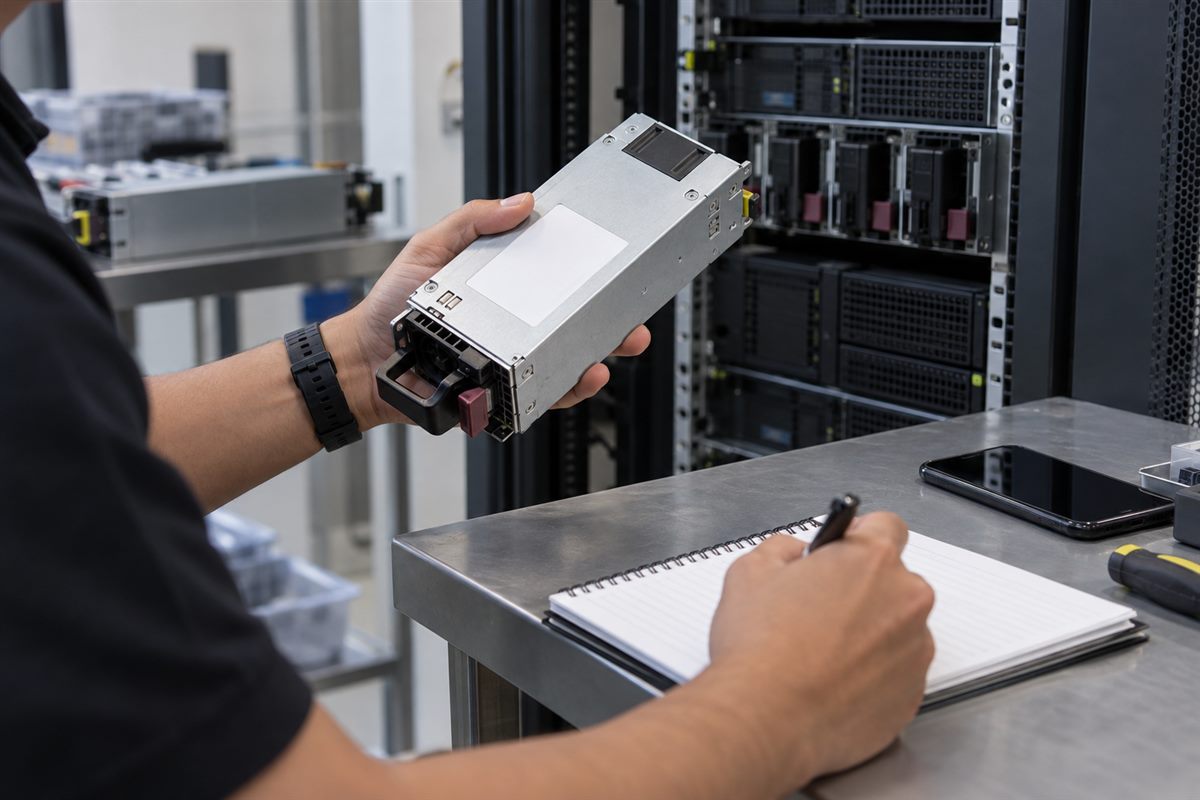
Untuk removable server PSU, label biasanya dilekatkan pada bahagian atas, tepi atau bawah casing besi. Kadang-kadang unit perlu dikeluarkan sebelum label boleh dilihat.
Kerja ini mesti dibuat oleh orang yang dibenarkan dan tahu cara mengendalikan server. Jangan buka casing PSU. Komponen di dalamnya boleh menyimpan tenaga elektrik walaupun plug sudah dicabut.
Illustrative image.
Nombor mana yang perlu dicatat?
Satu label mungkin mempunyai banyak nombor. Cari perkataan seperti:
Part number atau P/N.
Spare number atau SP number.
Model.
Assembly number.
Revision.
Wattage.
Salin nombor penuh, termasuk huruf, tanda sengkang dan angka kosong di hadapan. Jangan ambil sebahagian sahaja kerana nombor yang hampir sama mungkin merujuk kepada revision lain.
Kenapa watt sahaja tidak cukup?
Dua PSU boleh sama-sama mempunyai kuasa 750W tetapi masih tidak serasi. Saiz, connector, sistem komunikasi, reka bentuk dan generation server mungkin berbeza.
Wattage ialah salah satu perkara untuk disemak, bukan satu-satunya cara memilih pengganti.
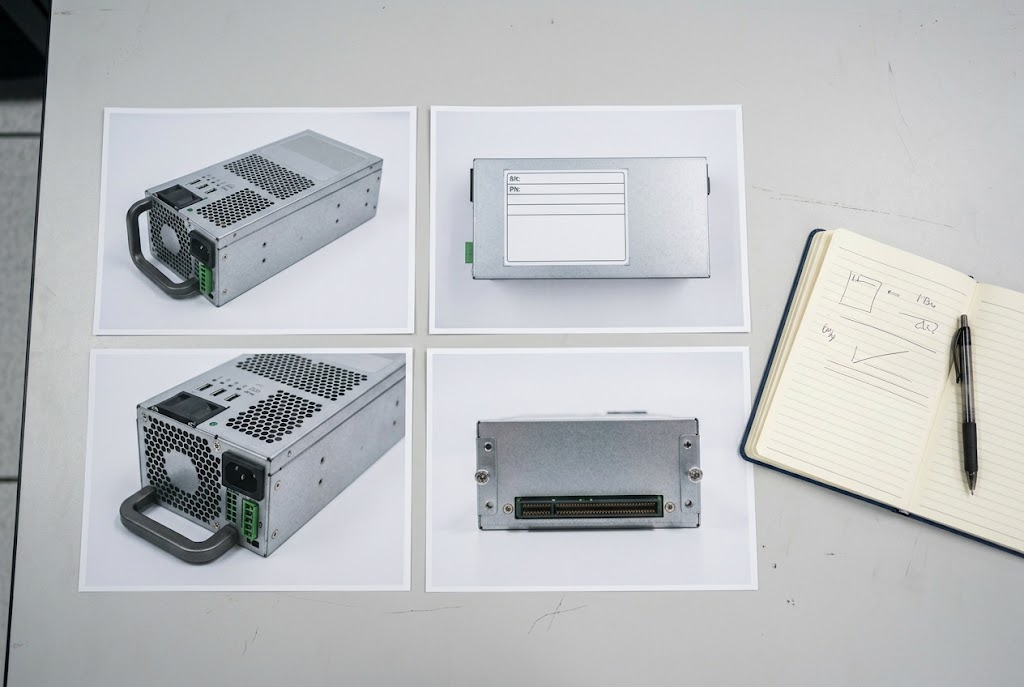
Empat gambar yang sangat membantu
Gambar penuh PSU.
Gambar label yang dekat dan jelas.
Bahagian pemegang, kipas dan hujung luar.
Bahagian connector yang masuk ke dalam server.
Ambil juga gambar label model server atau maklumat daripada management screen jika sesuai. Tutup serial number sulit dan asset tag pelanggan jika tidak diperlukan.
Illustrative image.
Semak cara PSU digunakan
Ada server menggunakan dua atau lebih power supply untuk redundancy. Catat jumlah PSU yang sedang dipasang dan sama ada unit baharu perlu digunakan bersama PSU lama.
Jangan anggap dua PSU boleh dicampurkan hanya kerana kedua-duanya muat. Minta pihak IT atau pemilik teknikal mengesahkan keperluan sistem.
Kalau label sudah rosak atau tidak boleh dibaca
Semak rekod pembelian lama, laporan maintenance dan hardware-management interface server. Sesetengah server menyimpan maklumat PSU secara elektronik.
Dokumentasi rasmi pengeluar juga boleh membantu apabila model penuh server atau service reference diketahui.
Maklumat untuk permintaan sebut harga
Jenama dan model penuh server.
Part number dan spare number PSU lama.
Wattage dan revision.
Jumlah PSU yang dipasang.
Gambar label dan connector.
Kuantiti diperlukan.
Lokasi penghantaran di Malaysia.
Penting: Jangan keluarkan atau menggantikan PSU pada server yang sedang beroperasi tanpa mengikuti prosedur teknikal syarikat. Rujuk orang IT yang bertanggungjawab jika tidak pasti.
Minta sebut harga server PSU Hantar model penuh server, part number atau spare number PSU lama, gambar yang jelas, kuantiti dan lokasi penghantaran di Malaysia supaya pilihan sourcing boleh dinilai.
Your server power supply has failed, but the purchase record only says “server PSU”. That description is usually not enough to find the correct replacement.
The most useful information is normally printed on the power supply itself. Before asking for a quotation, identify the server and record the numbers on the old unit.
Begin with the server model
Record the server manufacturer and complete model. Include the generation or machine type when it is shown.
A broad description such as “Dell server” or “HP power supply” covers many different systems. Even servers that look similar may use different PSU designs.
Where to look on the PSU
On a removable server PSU, the label is commonly attached to the top, side or underside of the metal casing. You may need to remove the unit to see it, but this should only be done by someone who is authorised and familiar with the equipment.
Do not open the PSU casing. A power supply can contain dangerous electrical energy even after it has been disconnected.
Illustrative image.
Which number should you record?
A server PSU label may contain several numbers. Look for terms such as:
Part number or P/N.
Spare number or SP number.
Model.
Assembly number.
Revision.
Wattage.
Record the complete value, including letters, dashes and leading zeroes. A shortened number may refer to a different revision or assembly.
Why wattage is not enough
Two server power supplies can both be rated at 750 watts and still be different. Their physical size, connector, firmware communication, efficiency class or supported server generation may not match.
Use wattage as one check, not as the only way to choose a replacement.
Take four useful photos
The complete PSU.
A close, readable picture of the label.
The handle, fan and outer end.
The connector side that enters the server.
Also photograph the server model label or management-screen details where appropriate. Hide confidential serial numbers and customer asset tags unless they are required for the support process.
Illustrative image.
Check how the server uses its PSUs
Some servers use two or more power supplies for redundancy. Record how many are installed and whether the new unit needs to operate beside an existing PSU.
Do not assume that two PSUs can be mixed simply because both fit. Ask the server administrator or technical owner to confirm the operating requirement.
What if the label cannot be read?
Check previous purchase records, maintenance reports and the server’s hardware-management interface. Some systems record PSU details electronically. Manufacturer support documentation may also help when the complete server model or service reference is available.
Dell, for example, documents how a PowerEdge PSU part number can be read from its label or recorded through iDRAC. The exact method depends on the server.
Information to send for a quotation
Server manufacturer and full model.
Existing PSU part and spare numbers.
Wattage and revision.
Number of PSUs installed.
Clear label and connector photos.
Quantity required.
Malaysian delivery location.
Important: Do not replace or remove a live server PSU unless your technical procedure allows it. Ask the responsible IT person when there is any doubt.
Request a server PSU quotation Send the full server model, existing PSU part or spare numbers, clear photographs, quantity and delivery location in Malaysia so available sourcing options can be assessed.
Komponen sudah rosak, tetapi rekod pembelian lama tidak jumpa. Label pula berhabuk dan gambar yang diterima oleh bahagian purchasing terlalu gelap untuk dibaca.
Keadaan macam ini memang biasa berlaku. Berita baiknya, beberapa keping gambar yang jelas boleh banyak membantu.
Gambar sahaja belum boleh mengesahkan keserasian. Namun, gambar yang betul memudahkan pembekal memahami barang apa yang sedang dicari.
Illustrative image.
Ambil satu gambar penuh dahulu
Letakkan komponen di atas meja yang bersih dan berwarna biasa. Ambil gambar yang menunjukkan bentuk keseluruhan barang. Jangan potong terlalu rapat sehingga bahagian tepi tidak nampak.
Kalau komponen tidak boleh dikeluarkan dengan selamat, ambil gambar semasa ia masih dipasang. Pastikan kedudukannya di dalam server, laptop, control panel atau mesin dapat dilihat.
Ambil gambar dekat untuk setiap label
Label biasanya mengandungi maklumat yang paling berguna seperti model number, part number, spare number, voltage, wattage atau revision.
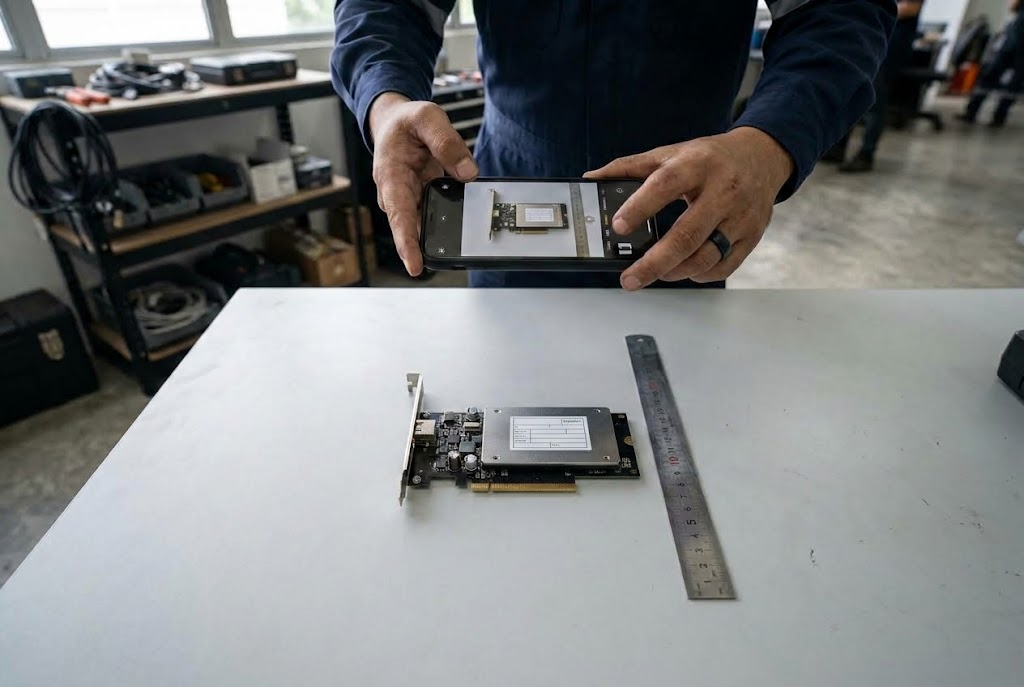
Pastikan telefon selari dengan permukaan label. Tekan pada bahagian label di skrin supaya kamera fokus. Selepas ambil gambar, cuba zoom. Kalau anda sendiri susah membaca nombor tersebut, pembekal juga akan menghadapi masalah yang sama.
Jika cahaya lampu memantul pada label, ubah sedikit sudut telefon atau kedudukan komponen.
Tunjukkan semua connector
Dua komponen boleh nampak hampir sama tetapi mempunyai connector atau susunan pin yang berbeza. Ambil gambar terus dari hadapan untuk setiap plug, socket dan hujung kabel.
Untuk kabel, ambil gambar kedua-dua hujung secara berasingan. Untuk power supply, tunjukkan bahagian pemegang atau kipas serta bahagian yang masuk ke dalam peralatan.
Illustrative image.
Jangan lupa model peralatan
Gambar komponen yang sudah dikeluarkan mungkin tidak cukup. Ambil juga gambar label model pada laptop, server, PLC, HMI atau mesin yang menggunakan komponen tersebut.
Lindungi maklumat sulit. Tutup nama pelanggan, asset tag dalaman dan serial number jika maklumat itu tidak diperlukan untuk tujuan pengenalpastian.
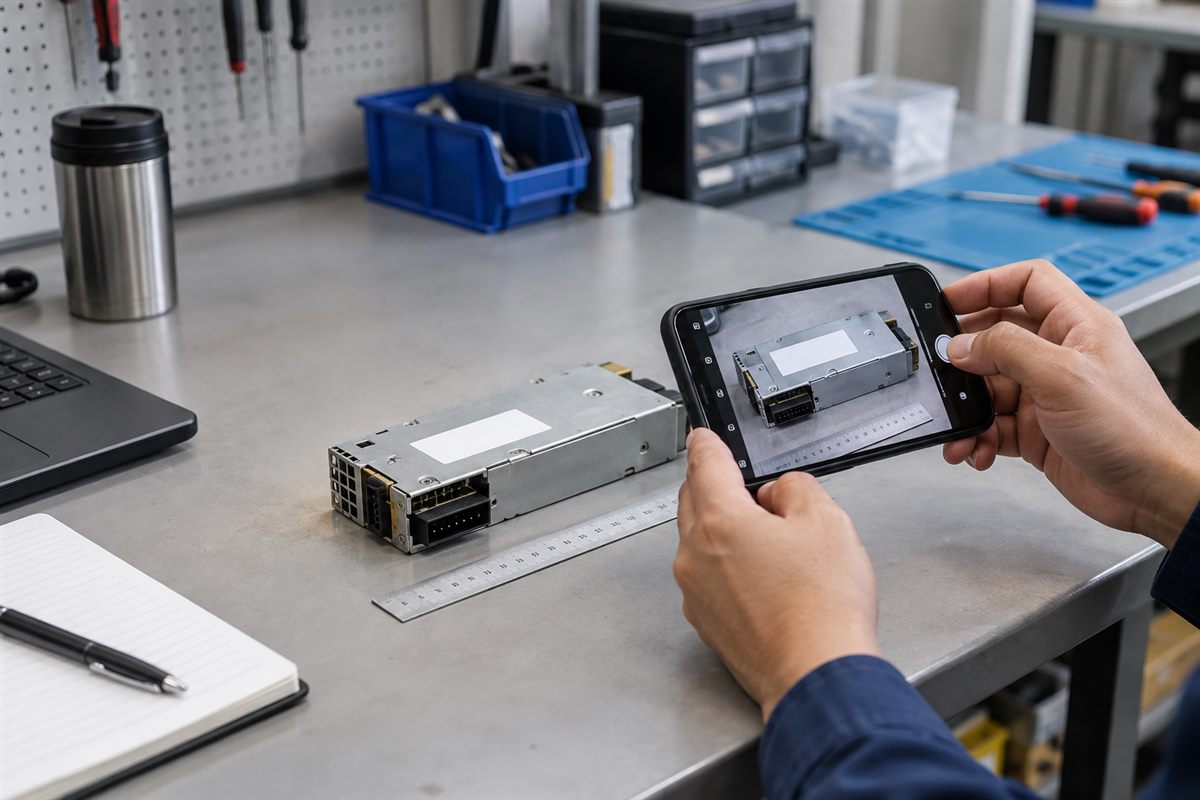
Letak pembaris jika saiz penting
Jika ukuran mungkin mempengaruhi pilihan pengganti, letakkan pembaris di sebelah komponen. Ambil gambar dari atas supaya bacaan tidak nampak lebih panjang atau pendek daripada ukuran sebenar.
Kesilapan gambar yang selalu berlaku
Hanya satu gambar mesin dari jauh.
Gambar label terlalu dekat sehingga sebahagian nombor terpotong.
Gambar kabur kerana tangan bergerak.
Pantulan cahaya menutup tulisan.
Gambar dikecilkan terlalu banyak sebelum dihantar.
Hanya satu hujung kabel ditunjukkan.
Maklumat yang perlu dihantar bersama gambar
Beritahu jenama, model peralatan, kuantiti dan sebab komponen perlu diganti. Nyatakan sama ada nombor part yang sama diperlukan atau pasukan teknikal anda sanggup menilai pilihan lain.
Masukkan juga lokasi penghantaran di Malaysia dan tarikh barang diperlukan. Tarikh tersebut membantu perancangan, tetapi bukan jaminan stok atau masa penghantaran.
Senarai semak ringkas
Gambar penuh komponen.
Semua label.
Semua connector.
Kedua-dua hujung kabel.
Lokasi komponen dipasang.
Label model peralatan.
Pembaris atau ukuran, jika berkaitan.
Penting: Gambar membantu proses pengenalpastian. Model, spesifikasi dan kegunaan sebenar masih perlu disemak sebelum membuat pesanan.
Minta bantuan mengenal pasti komponen Hantar gambar yang jelas bersama model peralatan, kuantiti dan lokasi penghantaran di Malaysia. NJ Bravo boleh menilai pilihan sourcing berdasarkan maklumat yang diberikan.
You have a failed part on the table, but nobody can find the old purchase record. The label is dusty, the connector is hidden, and the only photo sent to purchasing is a dark picture taken from across the room.
That makes sourcing much harder than it needs to be.
A few clear photographs can help a supplier understand what you are looking for. They do not prove compatibility by themselves, but they give the supplier a much better starting point.
Illustrative image.
Start with one photo of the whole part
Place the part on a clean, plain surface. Take one photo that shows its overall shape. Leave a little space around it instead of cropping tightly.
If the part cannot be removed safely, photograph it where it is installed. Step back far enough to show where it sits inside the server, laptop, control panel or machine.
Take a close photo of every label
The label is often more useful than the front of the part. It may contain a model number, part number, spare number, voltage, wattage or revision.
Hold the phone parallel to the label. Tap the label on the screen so the camera focuses on it. Check the photo before sending it—if you cannot read the number when you zoom in, the supplier probably cannot read it either.
Watch for glare from overhead lights. Moving the part or phone slightly is often enough to make the label readable.
Show the connectors from both sides
Two parts can look almost the same from the outside but use different connectors or internal wiring. Take a straight-on photo of every connector, socket and cable end.
For cables, photograph both ends separately. For a power supply, show the handle or fan side and the side that connects to the equipment.
Illustrative image.
Include the equipment model
A loose part may not tell the full story. Photograph the model label of the laptop, server, PLC, HMI or other equipment in which it is used.
Do not send passwords or confidential asset information. Cover customer names, internal asset tags and serial numbers when they are not needed for identification.
Show size only when it matters
If dimensions may affect the replacement, place a ruler beside the part and take a photo from directly above. Do not hold the ruler at an angle because this can make the measurement misleading.
Avoid these common photo problems
One distant photo of the complete machine.
A close-up that cuts off part of the label.
Blur caused by moving the phone too quickly.
Strong glare hiding the printed numbers.
Photos sent through an app that reduces the image too much.
Only one cable end when both ends are different.
What to send with the photos
Add a short message with the manufacturer, equipment model, quantity and reason for replacement. Say whether you need the exact same part or whether your technical team is willing to review an alternative.
Also include the Malaysian delivery location and the date the part is required. The required date is useful for planning, but it is not a guarantee of availability or delivery.
Quick photo checklist
Whole part.
Every label.
Every connector.
Both cable ends.
Installed location.
Equipment model label.
Ruler or dimensions, if relevant.
Important: A photograph helps with identification. The exact model, specifications and intended use still need to be checked before ordering.
Request help identifying a part Send clear photos together with the equipment model, quantity and delivery location in Malaysia. NJ Bravo can then assess available sourcing options against the information provided.
This guide helps buyers collect the right information to source rare or discontinued IT and industrial parts. It explains how to reduce compatibility risk when normal catalogue purchasing is not enough.
Identify the part•Verify compatibility•Keep operations running
Sourcing discontinued or hard-to-find IT parts in Malaysia requires a more disciplined process than ordinary catalogue purchasing. When an adaptor, server PSU, motherboard, industrial cable, KVM accessory or legacy display cable is no longer readily available, procurement teams must balance speed, compatibility, condition and operational risk.
For Malaysian businesses, a discontinued part can affect far more than one device. It may delay a production line repair, leave a server without redundancy, extend downtime for a branch office or interrupt access to a specialist machine. The objective is not merely to locate “something similar”; it is to source a part that can be assessed against the installed equipment and intended use.
Important: Accurate part identification is the most useful starting point for discontinued hardware sourcing.
Identify Hard-to-Find IT Parts Accurately
The first step is accurate identification. Many sourcing delays occur because the initial request includes only a broad description, such as “old Dell PSU”, “PLC cable” or “laptop charger”. These descriptions are useful as a starting point, but they rarely provide enough detail to confirm a replacement.
Create a requirement record containing:
Manufacturer name
Full product model
Part number, spare number or revision number
Serial or service reference where relevant
Clear photographs of labels, connectors and the installed location
Quantity required
Failure symptoms or reason for replacement
Required delivery location in Malaysia
Whether a compatible alternative is acceptable
A complete request reduces back-and-forth and helps suppliers assess options more efficiently.
Illustrative image.
Distinguish Between Exact Replacement and Functional Alternative
Not every discontinued part requires an exact identical replacement. However, the decision should be made by the appropriate technical owner, not assumed during procurement.
An exact replacement is generally preferred where the item is:
A server power supply or motherboard
A proprietary laptop adaptor
A PLC programming or communication cable
A component inside validated equipment
Part of a redundant or regulated business system
Required to preserve an existing warranty, configuration or support arrangement
A functional alternative may be considered for lower-risk accessories, such as selected display cables, adapters or certain non-proprietary peripherals. Even then, the source device, destination device and intended operating conditions should be confirmed.
Procurement should clearly state whether substitutions are permitted. This prevents suppliers from spending time locating alternatives that the technical team cannot approve.
Preserve the Failed or Existing Part Where Possible
When a component fails, the instinct is often to dispose of it immediately. For hard-to-find parts, the failed item can be the best identification reference available.
Keep the part temporarily if practical, especially when it contains:
A readable label
Part, assembly or revision numbers
Connector information
Manufacturer branding
Physical dimensions or mounting references
Firmware or configuration details
For example, a server PSU may have a specific pull-tab, connector arrangement and part number that distinguish it from a similar-looking unit. A PLC cable may have identifying markings on the cable jacket or connector. A motherboard may require a board revision number in addition to the system model.
Photographs should include both wide views and close-up label images. Ensure text is legible and avoid glare.
Illustrative image.
Assess Equipment Criticality Before Sourcing
The urgency and sourcing strategy should reflect the role of the equipment. A replacement for a spare office monitor cable is different from a part needed to restore a server, production machine or warehouse system.
Classify requests according to business impact:
Critical: outage affects production, data access, safety processes or customer operations
High: outage affects a department, branch or key business function
Routine: replacement can be scheduled without material disruption
This classification helps procurement decide whether to seek a single replacement, hold contingency spares or evaluate a broader refresh plan. It also gives suppliers helpful context when prioritising a source-to-order request.
Verify Compatibility Before Commitment
A discontinued item may be listed under multiple references, superseded by another part or available only through specialised channels. Compatibility verification is therefore essential.
Ask the following:
Is the proposed item an exact reference match?
If not, what equipment model has it been assessed against?
Does the connector arrangement match?
Are there known differences in revision, wattage, port type or physical fit?
Does the item need supporting accessories, such as cables, trays or adapters?
Will the technical team inspect or test it before deployment?
For business-critical hardware, establish an internal acceptance process. This may include visual inspection, controlled installation, power-on testing and functional verification before the system is returned to service.
Do not treat a product photo alone as confirmation. Images can be generic, reused across listings or insufficient to show important revision details.
Consider Condition and Lifecycle Requirements
Hard-to-find parts may be available in different conditions, depending on the market and item type. Procurement should ask for clear condition information and align it with internal policy.
The appropriate choice may depend on:
Importance of the equipment
Required service life
Availability of backup units
Planned system replacement date
Need for manufacturer packaging or documentation
Internal asset-management requirements
For older infrastructure, sourcing a replacement can be the right short-term decision while a longer-term migration is planned. The procurement record should state whether the purchase is an emergency repair, a spare-holding strategy or part of a lifecycle extension plan.
Use a Source-To-Order Process Effectively
Source-to-order procurement is useful when the required part is rare, discontinued or not held as routine stock. It works best when the buyer provides detailed identification information and allows time for compatibility review.
A practical process is:
Collect full hardware details and photos.
Define whether an exact match is mandatory.
State quantity, urgency and delivery destination.
Ask for compatibility clarification where alternatives are proposed.
Obtain technical approval before final purchase where risk is high.
Record the successful replacement reference for future sourcing.
This final record is valuable. Once a business confirms a replacement for a legacy system, documenting the reference can save substantial time during the next failure.
Build a Legacy Parts Register
Organisations with older IT or industrial equipment should maintain a simple register of high-risk components. Include device model, installed location, key replacement part numbers, known compatible cables or adaptors, last replacement date and support status.
This is particularly useful for:
Legacy servers and storage systems
Industrial PCs
PLC and HMI equipment
KVM and console infrastructure
Laptop fleets with older charging designs
UPS and power-related accessories
A register does not remove the need for compatibility checks, but it gives procurement and technical teams a far stronger starting point when time matters.
Frequently Asked Questions
What details are most important for sourcing a discontinued IT part?
The most useful details are the full model number, original part number, revision information, clear label photographs, connector photos and the equipment in which the part is installed.
Can a newer part replace a discontinued one?
Sometimes, but it should not be assumed. Confirm physical fit, electrical requirements, port type, system generation and any manufacturer-specific compatibility considerations.
Should we keep spares for discontinued equipment?
For business-critical or difficult-to-replace systems, holding suitable spares may reduce downtime. The right quantity depends on equipment criticality, age and replacement strategy.
Request help sourcing a hard-to-find part Send the manufacturer, full model/part number, equipment model, label and connector photographs, condition requirement, quantity and delivery location in Malaysia. NJ Bravo can then assess available sourcing options against the information provided.
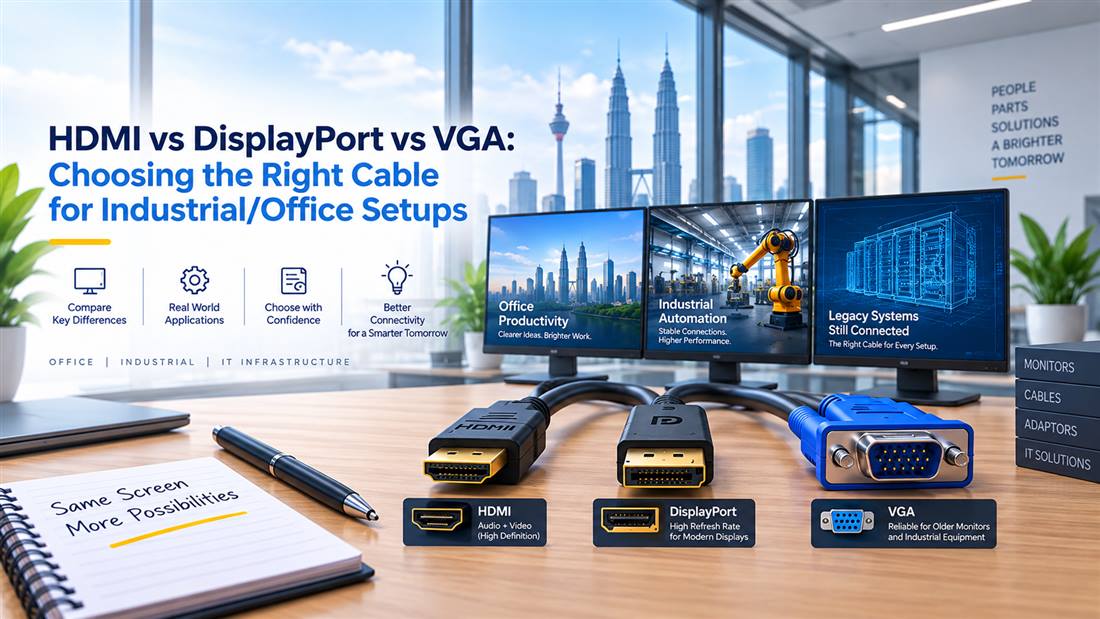
Quick Summary Use this guide to match a display cable to the ports, cable route and working environment. It helps non-technical buyers avoid “no signal” problems in office and industrial installations.
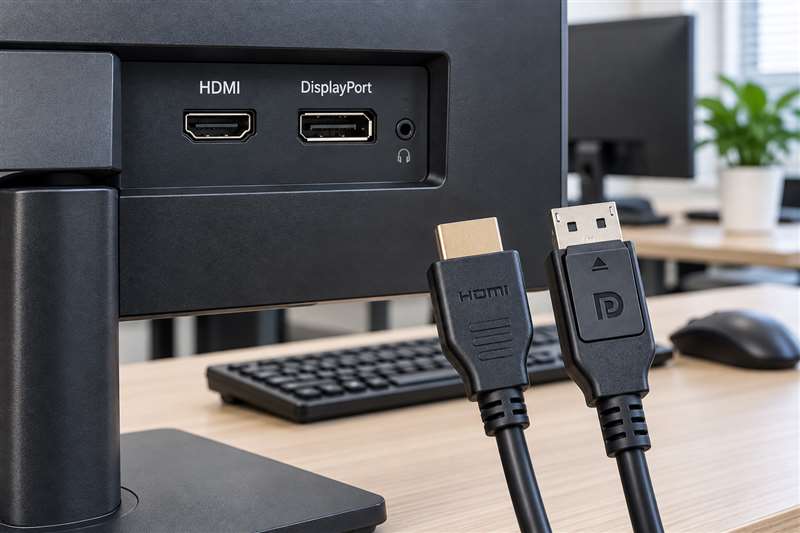
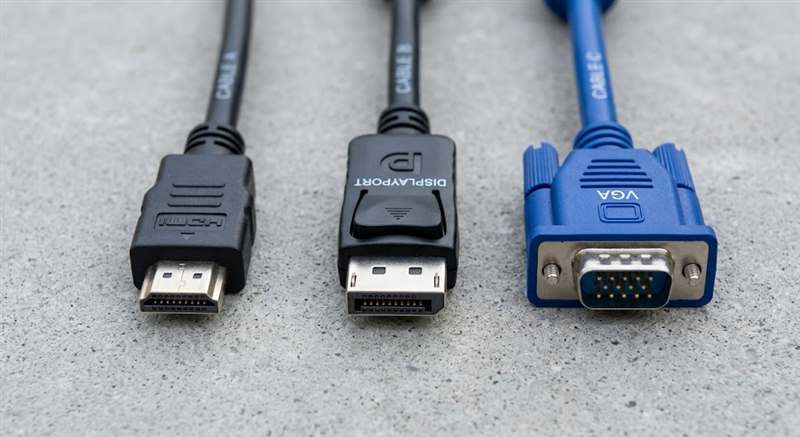
Choosing between HDMI, DisplayPort and VGA is a common procurement question because display connections are often treated as simple accessories until an installation fails. In offices, control rooms, production environments and meeting spaces, the correct cable supports reliable display output, appropriate image quality and easier long-term maintenance.
The best choice depends on the equipment at both ends, the intended display resolution, cable distance, installation route and environment. HDMI, DisplayPort and VGA each remain relevant in different Malaysian B2B applications, particularly where modern monitors must connect with legacy industrial PCs, KVM switches or control equipment.
Important: Confirm the source and display ports before ordering a cable or adapter.
Match HDMI, DisplayPort and VGA Ports First
Before choosing a cable, identify the output port on the source device and the input port on the display. The source may be a desktop PC, laptop dock, industrial computer, PLC-related display system, KVM switch, digital signage player or server console. The display may be a monitor, projector, television or industrial panel.
Record:
Source device make and model
Display make and model
Available ports on both devices
Required cable length
Intended resolution and refresh requirement
Whether audio is needed through the same cable
Whether the cable passes through a KVM switch, converter or extender
Installation conditions, including cable tray routing or interference exposure
This prevents the common mistake of selecting the preferred cable type without checking the actual hardware ports.
Illustrative image.
When HDMI Is a Practical Choice
HDMI is widely used for office monitors, televisions, projectors, meeting-room screens and digital signage. It is commonly chosen where a single cable is needed to carry video and, in many applications, audio.
For business procurement, HDMI can be a practical option when:
The source and display both have HDMI ports
The cable is used for standard office or meeting-room displays
Audio needs to travel with video
The installation uses common commercial display equipment
Existing infrastructure already uses HDMI switching or distribution
However, HDMI cable selection should still account for distance and signal path. Long runs, adapters, splitters and extenders can affect performance. If an installation requires a longer cable route, confirm the proposed solution rather than assuming any standard cable will work reliably at that distance.
For industrial use, check whether the cable will be subject to vibration, frequent movement or routing near electrical equipment. A cable appropriate for a boardroom may not be the right choice inside a machine enclosure.
When DisplayPort Is the Better Fit
DisplayPort is commonly found on business desktops, workstations, docking stations and professional monitors. It is often preferred where high-resolution computer displays, multi-monitor arrangements or modern workstation environments are involved.
DisplayPort may be suitable for:
Office desktops with DisplayPort outputs
Multi-monitor workstations
Engineering and design environments
IT administration consoles
Modern monitors with DisplayPort inputs
Docking stations used with business laptops
A key procurement point is connector direction. A simple DisplayPort-to-HDMI cable may be designed for one direction only. It should not be assumed that the same cable works in reverse from HDMI output to DisplayPort input. Where ports differ, determine whether a passive cable, active converter or dedicated adapter is required.
This distinction is important for helpdesk teams because incorrect cable direction is a frequent cause of “no signal” incidents after equipment refreshes.
Illustrative image.
Why VGA Still Matters in Legacy Environments
VGA is an analogue display connection that remains common in older office equipment, industrial PCs, legacy monitors, projectors and some server or control systems. It may not offer the same image quality or modern capability as digital interfaces, but it remains operationally relevant.
VGA is often encountered in:
Older production-line computers
Legacy KVM installations
Existing projectors
Industrial control panels
Older server console ports
Equipment awaiting phased replacement
When VGA is required, confirm the connector type and screw-lock arrangement. Cable quality, length and routing can influence image clarity, especially in electrically noisy industrial environments.
If a newer display lacks VGA input, a suitable conversion solution may be needed. Not all adapters behave the same way, so the source device, display device and desired signal direction should be confirmed before purchase.
Consider Cable Length and Signal Path
Cable length is more than a convenience detail. It can influence signal quality and determine whether an active extender, converter or other solution is required.
For each installation, consider:
Actual route length, not straight-line distance
Extra allowance for cable management
Number of adapters or intermediate devices
Need for wall plates, KVM switches or extenders
Access for future replacement
Whether the cable is fixed or frequently moved
Avoid excessive cable slack in industrial panels and avoid forcing connectors under tension. Both can create avoidable maintenance issues.
Industrial Versus Office Cable Requirements
An office desk installation generally prioritises neat routing and connector compatibility. Industrial installations may require more robust planning due to machinery, vibration, electrical noise, heat, dust or restricted access.
Before ordering for an industrial application, consult the maintenance or engineering team regarding:
Cable routing near power circuits or motors
Required shielding or construction
Bend radius and movement
Panel access
Connector retention
Replacement frequency
Where display cabling is part of a critical process or control-room environment, standardising cable types and maintaining labelled spares can shorten recovery time.
Avoid Common Procurement Errors
Common mistakes include ordering a cable without checking port type, using the wrong adapter direction, overlooking cable length and assuming legacy VGA equipment will connect directly to newer digital displays.
A better process is to capture photographs of both ports, note the equipment models and explain how the devices will be connected. This gives a supplier enough context to recommend a suitable cable or accessory without relying on guesswork.
Frequently Asked Questions
Is HDMI better than DisplayPort for office monitors?
Neither is universally better. HDMI is widely used and convenient for many office and meeting-room applications, while DisplayPort is common on business PCs, docks and multi-monitor setups. Choose based on the available ports and required display setup.
Can I connect VGA equipment to a modern HDMI monitor?
Possibly, but it may require an appropriate signal converter. Confirm the source output, display input and conversion direction before purchasing.
Does a longer HDMI or DisplayPort cable always work the same as a short cable?
Not necessarily. Signal reliability can be affected by cable length, cable quality, adapters and intermediate equipment. Review longer installations carefully.
Request a display cable quotation Send the source and display device models, the ports at both ends, resolution/refresh requirement where known, required cable length, quantity and delivery location in Malaysia. NJ Bravo can then assess available sourcing options against the information provided.
Quick Summary This guide helps buyers identify the PLC, HMI and connection details needed before ordering an industrial cable. It reduces delays caused by visually similar but incompatible connectors or pinouts.
Published 5 September 2026 · Last technically reviewed 11 September 2026 by the NJ Bravo technical sourcing team. This guide is part of the NJ Bravo Buying Guides collection. The team helps Malaysian buyers identify and source PLC and industrial automation parts, including items sourced to order.
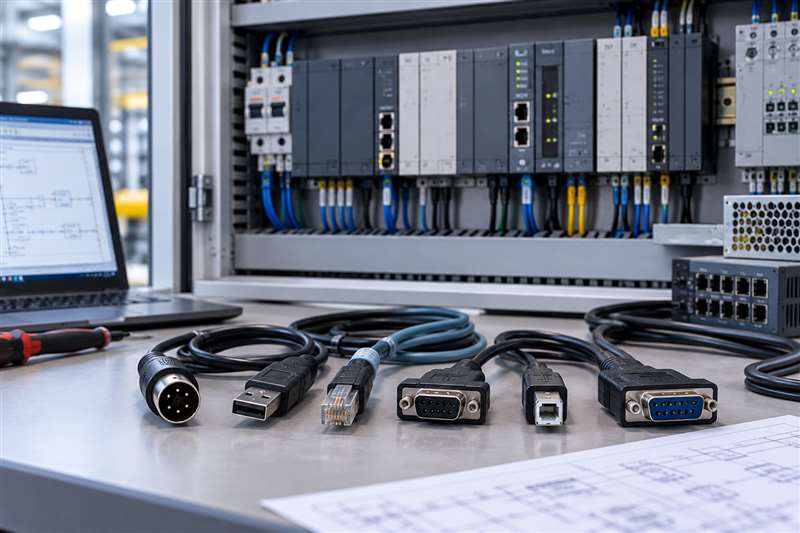
PLC programming and communication cables are small components with a significant impact on industrial maintenance. This guide helps Malaysian procurement teams identify the information needed before ordering cables for automation equipment.
A cable that appears similar may use a different pinout, communication standard, connector gender or controller-specific interface. Ordering by brand name alone can lead to site delays, failed commissioning work or unnecessary returns. The correct approach is to match the cable to the exact PLC, HMI, programming software environment and intended application.
In practice, this means identifying the exact PLC, HMI or programming-device model rather than relying on the manufacturer name alone. Buyers should confirm the controller family, full model number, PLC-side port type, connection purpose and the required computer-side interface before requesting a quote. Mitsubishi, Omron, Siemens and Delta each produce multiple controller families that use different connection methods, so the same brand name does not by itself indicate which cable is required.
What to Identify Before Requesting a PLC Cable
Before requesting a quotation, gather the following details. Supplying this information allows a proper compatibility assessment; it does not by itself confirm that a matching cable is available or compatible.
PLC, HMI or controller manufacturer.
Full equipment model number.
CPU or controller series/family.
Existing cable part number, if available.
PLC-side port type.
Computer-side port type, such as USB or serial.
Purpose: programming, communication, HMI connection or another defined use.
Required cable length, only where relevant.
Operating-system and programming-software version, where compatibility depends on them.
Clear photographs of the equipment label and connection ports.
Quantity and delivery location in Malaysia.
Important: Identify both connected devices and the purpose of the connection before choosing a PLC cable.
Identify the PLC Cable Connection Type First
The term “PLC cable” can refer to several different products. Before sourcing, clarify whether the requirement is for:
PLC programming
PLC-to-HMI communication
PLC-to-PC connection
PLC-to-inverter or servo communication
Network communication
Extension or replacement cabling
Legacy equipment maintenance
The cable required for programming a controller may not be the same cable used for routine communications between a PLC and an HMI. Likewise, cables used with Mitsubishi, Omron, Siemens and Delta systems often vary by controller family and equipment generation.
Start by identifying the exact model number of each connected device.
Illustrative image.
Common PLC Cable Categories
Programming Cables
Programming cables connect a PLC or related automation device to a computer or programming interface. Depending on the equipment generation, these may use serial connections, USB interfaces, Ethernet connections or manufacturer-specific connector arrangements.
Legacy controllers often require specialised programming cables that are no longer commonly held as standard stock. This is especially relevant when supporting installed equipment that has remained in service for many years. Where the original cable itself is discontinued, our guide to sourcing discontinued or hard-to-find IT and industrial parts outlines a practical identification process.
For a programming cable request, provide:
PLC brand and exact model
Computer connection required, such as USB or serial
PLC-side connector type
Existing cable part number, if available
Programming software or application context, where known
HMI and PLC Communication Cables
Communication cables connect PLCs with HMIs, operator panels or display equipment. Compatibility depends on both ends of the connection, not only the PLC.
For example, an HMI cable selected for a Mitsubishi controller may differ from one used with an Omron, Siemens or Delta PLC. Even within one manufacturer’s range, older and newer HMI families may have different ports and communication requirements.
Confirm both the PLC model and HMI model. Include the required cable length and installation environment if the cable runs through a control panel, machinery enclosure or cable tray.
Industrial Network Cables
Some automation systems use Ethernet-based, serial or fieldbus-style communication networks. The correct cable selection may involve considerations beyond the connector, including shielding, termination, network topology and environmental exposure.
Where network communication is involved, identify:
Protocol or network type, if known
Equipment at each end
Connector types
Whether the cable is for fixed installation or temporary service use
Required length
Exposure to electrical noise, movement, oil, heat or vibration
Do not substitute a general office cable for an industrial network application without confirming the system and environment requirements.
Illustrative image.
Compatibility Considerations by Brand
Mitsubishi, Omron, Siemens and Delta each supply multiple PLC and automation product families. A cable compatible with one series may not work with another series from the same manufacturer.
For example, a programming cable for a Mitsubishi PLC should be selected by the controller family and port type rather than simply as a “Mitsubishi cable”. The same principle applies to Omron, Siemens and Delta equipment.
In practice, the most useful information for suppliers is:
Brand and full product code
Controller or HMI series
Port labels visible on the equipment
Existing cable reference
Photos of the ports and cable ends
Purpose of the connection
Photographs are particularly valuable for older panels, where equipment documentation may be incomplete or the original cable may have been modified over time.
Manufacturer Identification Comparison
The table below summarises what to identify for each manufacturer. It is an identification reference, not a compatibility matrix — the exact model and connection details must still be confirmed for each request.
Manufacturer
Information buyer must identify
Variables that may affect cable selection
What to photograph
Mitsubishi
PLC family and full CPU/model reference
Controller generation, PLC port and computer interface
Model label and PLC port
Omron
Controller family and full model reference
Peripheral/USB/serial/network connection and intended task
Model label and connection port
Siemens
SIMATIC family, CPU reference and engineering interface
Controller generation, interface and engineering environment
CPU label and interface
Delta
PLC/HMI family and full model reference
Device port, cable interface and programming purpose
Model label and port
Connector and Pinout Differences Matter
Industrial cables can have similar external connectors but different internal wiring. A cable with the correct plug shape may still fail because its pinout or signal conversion does not match the equipment.
Potential differences include:
Male or female connector orientation
Number of pins
Straight-through or crossed wiring
Serial interface arrangement
USB conversion electronics
Shielding arrangement
Proprietary communication layouts
Avoid relying on visual comparison alone. When a cable is being sourced as a replacement, compare the complete reference where possible. If no part number exists, collect photos of both cable ends and all connected devices.
Cable Length and Installation Conditions
Cable length should be specified as part of the purchase request. A programming cable for field maintenance may need a practical length for access to a panel, while a permanently installed communication cable may require routing through conduits or cable trays.
For industrial environments, also consider:
Electrical interference from motors or drives
Bending and movement
Temperature
Oil, dust or moisture exposure
Routing alongside power cables
Panel-entry and strain-relief requirements
The appropriate cable construction depends on the specific installation. Procurement should involve maintenance, automation and engineering personnel where the cable will be used in a production environment.
A Practical Sourcing Process
When a PLC cable is lost, damaged or unavailable, avoid ordering on a generic description. Instead, prepare a short requirement sheet with device models, port photographs, cable purpose and desired length.
For discontinued equipment, the original cable may be hard to locate. In these cases, accurate identification becomes even more important. A B2B source-to-order supplier can help assess options, but the final selection should be based on confirmed equipment details.
Frequently Asked Questions
Can one PLC programming cable work across all Mitsubishi or Siemens models?
No. Compatibility commonly differs between PLC series, generations and port types. Confirm the exact controller model and programming interface.
What if the original PLC cable part number is missing?
Provide clear photos of both equipment ports, the PLC model label, any remaining cable markings and a description of the intended connection.
Are standard USB cables suitable for PLC programming?
Only where the PLC or programming interface is designed to use that USB connection. Many systems require specific cables, adapters or communication interfaces.
Primary Sources
The general identification guidance above is supported by official manufacturer documentation. NJ Bravo does not claim to be an authorised distributor or partner of these manufacturers.
Mitsubishi Electric — FX Communication User Manual (RS-232C, RS-485, RS-422), FX series: confirms Mitsubishi FX-series controllers use multiple distinct communication interface standards depending on the module and application. Accessed 11 September 2026.
Omron — USB-Serial Conversion Cable CS1W-CIF31 User Manual, CS/CJ/CP/C/CVM1/CV series: confirms Omron specifies a dedicated conversion cable for these particular PLC families rather than a universal cable. Accessed 11 September 2026.
Siemens — PC Adapter USB A2 Operating Instructions, SIMATIC S7 (MPI/PROFIBUS): confirms SIMATIC controllers using MPI/PROFIBUS communication require this specific Siemens PC Adapter rather than a generic USB-to-serial cable. Accessed 11 September 2026.
Delta Electronics — DVP Series PLC Technical Profile, DVP series: documents the DVP-series PLC family and its associated programming and communication accessories as a defined product ecosystem. Accessed 11 September 2026.
Request a PLC cable quotation Send the PLC or HMI brand, full model number, port photographs, required connection purpose, quantity and delivery location in Malaysia. NJ Bravo can then assess available sourcing options against the information provided.
Quick Summary This guide helps buyers identify the server details needed to source a compatible replacement PSU. It is useful when a server power supply fails or a business needs a verified spare.
A server power supply unit is not a generic interchangeable component. This guide is designed for IT managers, system administrators and procurement teams responsible for maintaining business infrastructure. Whether the requirement is a planned replacement, a spare for critical hardware or support for an older server, compatibility should be checked before an order is raised.
A PSU mismatch can prevent a server from starting, trigger system alerts, affect redundant power operation or create an avoidable outage. In Malaysia, where replacement lead times can influence operational continuity, accurate identification is especially important for branch offices, data rooms, manufacturing systems and enterprise IT environments.
Important: Start with the exact server model and existing PSU reference; wattage alone is not enough.
Start With the Exact Server Model
The server’s exact make, model and existing PSU reference should form the basis of every purchase request. “Dell server PSU” or “HP power supply” is usually not enough information for a compatibility assessment.
Collect the following details:
Server manufacturer and complete model
Chassis type and generation
Existing PSU part number or spare part number
PSU wattage and input/output label details
Whether the server uses redundant power supplies
Quantity of PSUs currently installed
Photographs of the PSU label and connector side, if available
Urgency and intended deployment location
If the existing PSU has failed, the label may still be readable after removal. If it is not, the server’s service information, maintenance records or system management interface may provide useful references.
Illustrative image.
Understand Form Factor and Mechanical Fit
A server PSU must fit the physical chassis correctly. Rack servers, tower servers, blade systems and storage appliances may use distinctly different PSU designs.
Key mechanical checks include:
PSU dimensions and handle position
Location of locking mechanisms
Airflow direction
Connector placement
Hot-swap or fixed-install design
Chassis bay arrangement
Two power supplies with similar wattage are not necessarily interchangeable. A unit may be electrically capable in theory but still fail to fit the server bay or connect to the internal power distribution board.
For hot-swappable systems, it is also important to confirm whether the replacement is intended for the same server generation. Manufacturers may change physical and electrical designs between server generations, even when product names appear similar.
Verify Electrical Requirements
PSU wattage is a useful reference but should not be treated as the only requirement. The power supply must support the server’s configuration, including processors, memory, storage drives, RAID controllers, network cards, accelerators and other installed components.
A lower-capacity replacement may not provide enough headroom for the configured hardware. This can result in power warnings, failed startup attempts or restricted operation. Conversely, selecting a higher-capacity unit without checking compatibility may still be unsuitable due to chassis, firmware or connector differences.
Procurement teams should also verify the input power environment. Malaysian facilities commonly operate on mains power appropriate for enterprise equipment, but the PSU label and local electrical installation should still be reviewed. For server rooms with UPS systems, ensure that the combined server load is considered during planning.
Illustrative image.
Redundant PSU Systems Require Extra Attention
Many business servers are configured with redundant PSUs. In a redundant setup, more than one PSU shares the load so that the server can continue operating if one supply fails, subject to the server design and power configuration.
When replacing one unit, check:
Whether the remaining installed PSU has the same reference
Whether both units are expected to match in capacity and type
Whether the server supports mixed PSU configurations
Whether the replacement will be used as an active unit or cold spare
Whether the server has reported any power redundancy alerts
Mixing different PSU models without verification can lead to loss of redundancy, warning messages or inconsistent system behaviour. The practical approach is to match the existing PSU reference wherever possible.
For critical infrastructure, it is prudent to replace a failed unit promptly rather than continue operating indefinitely without redundancy.
Firmware, Management Alerts and Vendor-Specific Designs
Modern servers may monitor power supply health through system management tools. A physically installed PSU may still generate alerts if the system does not recognise it as compatible.
Common signs of an issue include:
PSU status shown as degraded or unavailable
Power redundancy warning
Fan speed changes
Hardware inventory alerts
Server refusing to power on after installation
These issues are not always caused by a defective PSU. They can result from an incorrect part, an unsupported generation or an incompatible revision. Give the supplier as much identification information as possible so that the proposed replacement is assessed against the actual server configuration.
Planning Spares for Business Continuity
For organisations operating multiple similar servers, standardised spare planning can reduce downtime. Keep a record of installed server models, PSU part references, redundancy status and physical locations.
Consider holding a spare PSU when the server supports an important business system, such as:
File and backup services
Production databases
Virtualisation hosts
Network management platforms
Factory or warehouse applications
CCTV or access-control recording systems
The appropriate spare quantity depends on the criticality of the system, equipment age and service strategy. There is no universal answer, but a documented plan is preferable to sourcing only after a failure occurs.
Frequently Asked Questions
Can I replace a server PSU using only the wattage rating?
No. Wattage alone does not confirm compatibility. Check the server model, PSU part number, physical form factor, connector arrangement and redundancy requirements.
Should both redundant server PSUs be identical?
In most cases, matching installed units is the safer approach. Verify the server manufacturer’s compatibility guidance before mixing PSU models or capacities.
What should I provide for a server PSU quotation?
Provide the server make and model, existing PSU part number, PSU label photo, redundancy setup and required quantity. This helps avoid incorrect replacement selection.
Request a server PSU quotation Send the server brand/model, PSU part or spare number, revision, wattage, connector details or photo, quantity and delivery location in Malaysia. NJ Bravo can then assess available sourcing options against the information provided.
Quick Summary Use this guide to check a replacement laptop adaptor against the laptop model, power requirement and connector before ordering. It helps non-technical buyers avoid charging and compatibility problems.
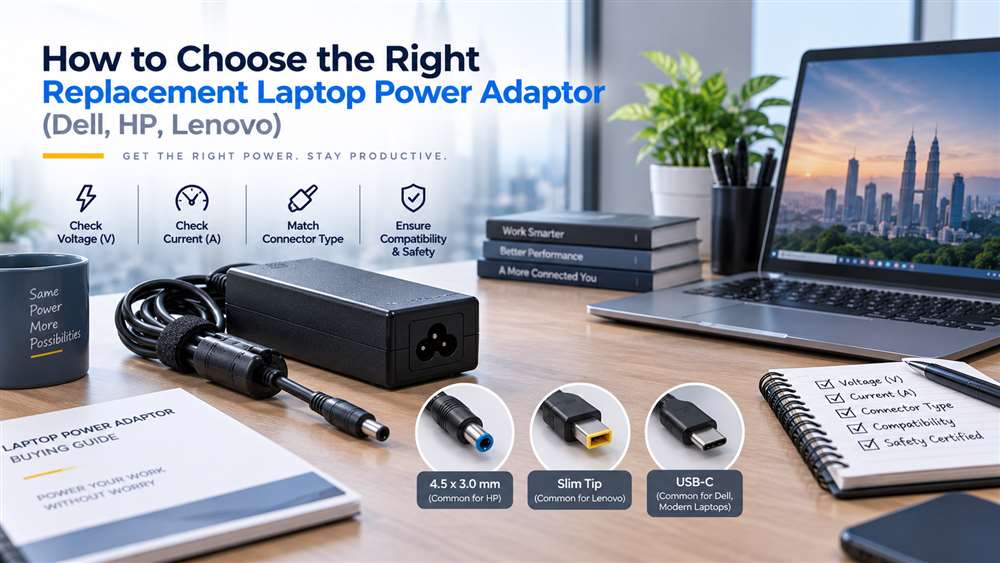
Choosing the right replacement laptop power adaptor for Dell, HP or Lenovo equipment is a procurement decision that affects uptime, battery performance and device safety. For Malaysian businesses managing employee laptops, field-service units or shared workstations, the priority is not simply finding an adaptor that fits physically. The replacement must match the laptop’s electrical requirements, connector type and, where applicable, brand-specific identification system.
An incorrect adaptor may fail to charge the battery properly, display warning messages, reduce performance or create unnecessary risk to the laptop and connected equipment. This guide outlines the practical checks procurement teams should complete before ordering replacement laptop power adaptors.
Important: Match the output voltage before considering connector shape or wattage.
Choose a Compatible Replacement Laptop Power Adaptor
The most reliable starting point is the original adaptor label or the laptop manufacturer’s documented power requirement. Record the following details before requesting a quotation:
Laptop brand and full model number
Original adaptor part number, if available
Output voltage
Output current or wattage
Connector type and size
Whether the laptop uses USB-C charging
Quantity required and intended use, such as desktop replacement, travel spare or service stock
Do not rely only on the laptop’s brand. Dell, HP and Lenovo each have multiple product ranges, and even laptops from the same manufacturer may use different connector types, wattages and charging methods.
Illustrative image.
Match the Output Voltage First
Voltage is the most important electrical factor. The adaptor’s output voltage should match the laptop’s stated input requirement. A close-looking connector does not make an adaptor suitable if the voltage is incorrect.
Many laptop adaptors use similar voltage ranges, but procurement teams should verify the label instead of assuming interchangeability. Voltage information is usually printed beside “Output” on the adaptor label and may also appear on the laptop’s underside or manufacturer documentation.
Where the original adaptor is unavailable, provide the laptop model and service tag or serial reference where appropriate. This gives the supplier a better basis for identifying a suitable replacement.
Check Wattage and Current Capacity
After confirming voltage, assess the adaptor’s power capacity. Wattage is generally calculated from voltage multiplied by current. A replacement adaptor should provide sufficient power for the laptop’s normal use.
This matters particularly for:
Mobile workstations
Laptops with dedicated graphics
Engineering, design or development devices
Models connected to docks or multiple peripherals
Older business laptops that may have higher power demands than compact modern units
Using an adaptor with insufficient capacity can lead to slow charging, intermittent charging or reduced laptop performance under load. Some systems may also limit processing speed when they do not detect an adequate power source.
A higher-capacity adaptor is not automatically appropriate. It must still have the correct voltage, connector and compatible charging design. Procurement teams should ask for confirmation based on the exact laptop model rather than selecting by wattage alone.
Illustrative image.
Identify the Connector Type
Laptop adaptor connectors have evolved significantly. Common formats include round barrel connectors, slim-tip connectors and USB-C connectors. Even within the Dell, HP and Lenovo ecosystems, connectors may differ between older and newer model families.
For round or slim connectors, verify:
External connector shape
Internal pin or contact arrangement
Plug diameter where relevant
Cable orientation and strain-relief design
Whether the original adaptor uses a centre pin or smart-pin system
For USB-C laptops, a charger must support the appropriate USB-C power delivery capability for the laptop. Not every USB-C charger is suitable for every USB-C laptop, especially where the laptop requires more power than a basic phone or tablet charger can provide.
A clear photograph of the original adaptor label and connector is often useful when requesting a quote for a replacement.
Consider Brand Identification and Intelligent Charging Features
Certain Dell, HP and Lenovo models use adaptor identification methods that allow the laptop to recognise an approved or compatible power source. This can influence charging behaviour and system warnings.
For example, some laptops may display a message if they cannot identify the adaptor correctly, even when the connector physically fits. In these cases, the laptop might power on but charge slowly, refuse to charge the battery or operate with reduced performance.
This is why generic “universal” adaptors should be assessed carefully in a business environment. They may be suitable for selected applications, but they are not the best default choice when reliable charging and predictable compatibility are required.
For fleet procurement, standardising on verified replacement options for each laptop model can reduce support tickets and avoid confusion at branch offices or customer sites.
Original, OEM-Compatible and Replacement Options
Businesses usually evaluate three broad categories:
Original manufacturer adaptors
OEM-compatible adaptors from established sources
Third-party universal adaptors
Original manufacturer units are often preferred where procurement policy, warranty considerations or manufacturer-specific charging requirements apply. OEM-compatible replacement adaptors may be appropriate when they are selected against the correct laptop model and electrical requirements.
Universal adaptors can be useful for temporary or multi-device use, but they introduce more variables: interchangeable tips, adjustable settings and differing output capabilities. They should not be issued without a clear compatibility check.
For important roles such as finance, technical support, sales engineering or on-site service teams, keeping a verified spare adaptor can be more cost-effective than losing a working day to a charging issue.
Build a Better Procurement Checklist
Before placing an order, confirm:
Full laptop model and brand
Original adaptor output voltage and wattage
Connector type or USB-C charging requirement
Original adaptor part number, if readable
Whether the laptop is used with a dock or high-power peripherals
Required quantity and delivery location in Malaysia
Whether the item is intended as a permanent replacement or contingency spare
For larger laptop fleets, maintain an internal register of laptop models and approved adaptor types. This reduces repeat research, helps new procurement staff and supports faster response when employees report lost or damaged adaptors.
Frequently Asked Questions
Can I use a Dell adaptor on an HP or Lenovo laptop?
Not as a general rule. Even where voltage and connectors appear similar, brand identification features, wattage requirements and connector designs can differ. Verify compatibility against the specific laptop model.
Is a higher-wattage laptop adaptor always safe?
Not automatically. The adaptor must still match the laptop’s voltage, connector and charging requirements. Confirm suitability before purchasing.
What information should I send when requesting a replacement adaptor quote?
Provide the laptop brand, full model number, original adaptor part number if available, output details from the label and a connector photograph where possible.
Request a laptop power adaptor quotation Send the laptop brand, full model number, original adaptor part number if available, voltage/wattage, connector photo, quantity and delivery location in Malaysia. NJ Bravo can then assess available sourcing options against the information provided.